GEOTECHNICALENGINEERING
GILBERT
HomeGeophysicsMASW / VS30 (shear wave velocity)

MASW and VS30 Shear Wave Velocity Testing in Gilbert, AZ

Geotechnical engineering with regional judgment.

LEARN MORE

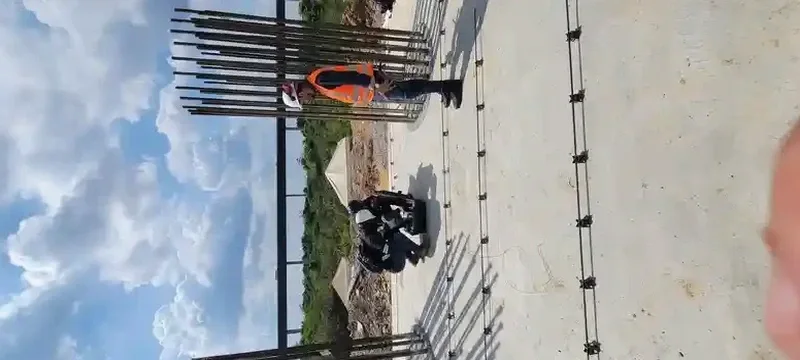
The geophone array stretches across the graded pad, a line of 24 vertical-component receivers spaced to capture surface wave dispersion across a broad frequency spectrum. In Gilbert’s eastern valley terrain, where the transition from basin fill to harder sedimentary rock can be subtle, that array configuration matters. Our field crew deploys a sledgehammer source and sometimes a weight drop, recording the propagation of Rayleigh waves through the subsurface to depths of 30 meters or more. The raw time-domain records are transformed through multi-channel analysis into a dispersion curve, which we then invert to obtain a one-dimensional shear wave velocity profile. This is the core of the MASW method, and from that profile we calculate VS30, the time-averaged shear wave velocity to 30 meters depth that directly determines the IBC seismic site class for the project.

VS30 is not just a number for the structural engineer—it’s the parameter that defines the seismic design category and the lateral force demands on the building.
Our service areas

Our approach and scope

A recent project near the Loop 202 Santan Freeway extension required a site class determination for a two-story commercial building on a parcel that had been agricultural land for decades. The upper 5 meters were soft silty clays typical of former irrigation zones in the town of Gilbert, underlain by a cemented layer that conventional SPT drilling had flagged as refusal. Our MASW survey resolved the velocity contrast clearly, showing a VS of 210 m/s in the upper layer jumping to over 500 m/s below 8 meters. The resulting VS30 placed the site firmly in class C, avoiding the more conservative class D assumption that would have added structural cost. Where the stratigraphy is complex, we often combine the surface wave data with a CPT test to constrain the inversion with tip resistance and sleeve friction, tying the velocity model to actual soil behavior units and improving confidence in the final seismic classification.
MASW and VS30 Shear Wave Velocity Testing in Gilbert, AZ
Technical reference — Gilbert

Local geotechnical context

Gilbert sits in the transition zone between the lower-velocity basin sediments of the Salt River Valley and the higher-velocity materials closer to the San Tan Mountains. A site on the south side of town near the Morrison Ranch neighborhood can yield a VS30 of 400 m/s, while a site just a few miles north toward the US 60 Superstition Freeway corridor might measure 250 m/s. That difference changes the seismic base shear coefficient and can affect foundation design assumptions significantly. The summer heat in Gilbert, with July highs averaging 105°F, also introduces operational constraints: surface wave measurements on very dry, cracked soil can exhibit altered dispersion if the near-surface is desiccated. Our protocol includes pre-wetting the first few inches of the surface when necessary and running surveys during early morning hours, ensuring the velocity profile represents the soil mass and not just the dry crust.

Need a geotechnical assessment?

Reply within 24h.

Email: info@geotechnicalengineering.sbs

Explanatory video

Applicable standards

IBC 2021 (International Building Code), Table 1613.2.3, ASCE/SEI 7-22 Minimum Design Loads for Buildings, ASTM D7400 Standard Test Methods for Downhole Seismic Testing (adapted principles for surface wave correlation), FHWA-NHI-16-072 Geotechnical Engineering Circular No. 5 on Geophysical Methods

Technical parameters

ParameterTypical value
Source typeSledgehammer (10-12 kg) or accelerated weight drop
Receiver array24-channel, 4.5 Hz vertical geophones
Standard investigation depth30 meters (extendable to 40 m)
VS30 reportingPer IBC 2021 and ASCE 7-22
Site class determinationA through F per IBC Table 1613.2.3
Data processingDispersion analysis and 1D inversion
Typical test duration2 to 3 hours field + processing

Questions and answers

What is VS30 and why does the building department in Gilbert require it?

VS30 is the time-averaged shear wave velocity in the upper 30 meters of the subsurface. The International Building Code uses VS30 to assign a seismic site class (A through F), which determines the design spectral response accelerations for the structure. The Town of Gilbert, following Maricopa County and IBC requirements, mandates site class determination for most new commercial and essential facilities as part of the geotechnical investigation.

How much does a MASW survey cost for a typical Gilbert lot?

For a standard commercial lot or single-family residential parcel in Gilbert, a complete MASW survey with VS30 calculation and a signed report typically ranges from US$1,640 to US$3,580. The final cost depends on the number of array setups required, site access conditions, and whether combined SPT or CPT data is needed to constrain the inversion.

Can MASW be done on a site that already has a building or pavement?

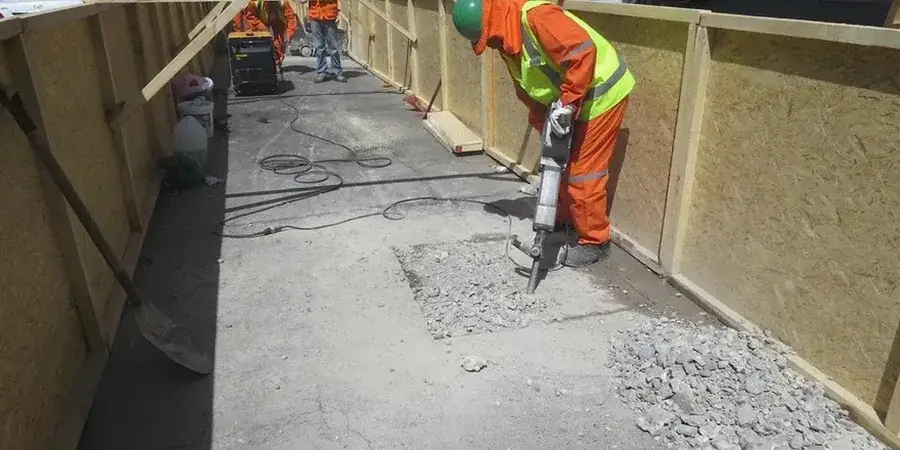
Yes, with limitations. The geophone array needs good ground coupling, so asphalt or concrete pavement requires drilling small pilot holes for each receiver. The surface wave energy propagates beneath the slab, so the method still works, but the setup time increases. For sites with thick reinforced slabs, we sometimes recommend a downhole seismic test in a borehole instead.

How long does it take to get the VS30 report after the field test?

Field acquisition on a standard Gilbert site takes two to three hours. We process the data the same day or the following day, running the dispersion analysis and inversion to produce the shear wave velocity profile. The final signed report with the IBC site class determination is typically delivered within three business days, or faster if the project is on an expedited schedule.

What site class is most common in Gilbert?

Most sites in Gilbert fall into site class C (very dense soil and soft rock with VS30 between 360 and 760 m/s) or class D (stiff soil with VS30 between 180 and 360 m/s). The eastern areas closer to the Higley and San Tan Mountain foothills tend toward class C, while the older agricultural lands in the central and northern parts of town often classify as D due to deeper alluvial deposits. Our experience across dozens of sites in the town lets us give preliminary expectations based on parcel location alone.

Location and service area

We serve projects in Gilbert and surrounding areas.

View larger map