GEOTECHNICALENGINEERING
GILBERT
HomeFoundationsShallow foundation design

Shallow Foundation Design in Gilbert, AZ — Geotechnical Safety for Residential & Commercial Projects

Geotechnical engineering with regional judgment.

LEARN MORE

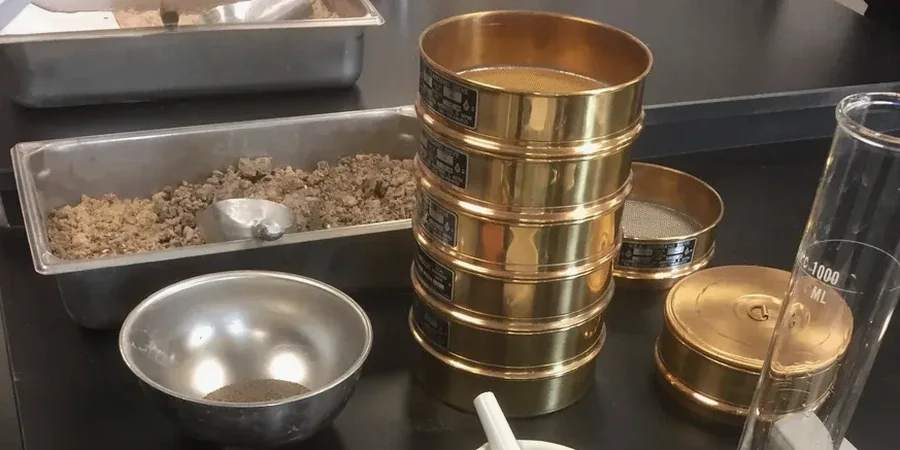
Gilbert’s transformation from a railroad stop into a 270,000-resident suburban hub has pushed construction into areas where the soil tells a complicated story. The town sits on the eastern edge of the Salt River Valley, atop Pleistocene alluvial fans interbedded with fine-grained lake deposits left by ancient high stands of the Salt River. These lacustrine clays swell when wet and shrink when dry, creating a subgrade that can heave a slab-on-grade by two inches between July monsoon season and a dry June. A proper shallow foundation design here means reading the geomorphic bench where the project sits — the older fan surfaces near the Santan Mountains behave differently than the basin-floor silts along the Eastern Canal. Our team runs Atterberg limits and consolidation tests on undisturbed Shelby tube samples to gauge expansion potential before a single footing is dimensioned, and we cross-check those lab numbers with in-situ density profiles from sand cone density testing across the building pad.

Expansive clay in Gilbert can lift an unreinforced slab edge by over an inch in a single monsoon season — the foundation either moves with the soil or cracks trying to resist it.
Our service areas

Our approach and scope

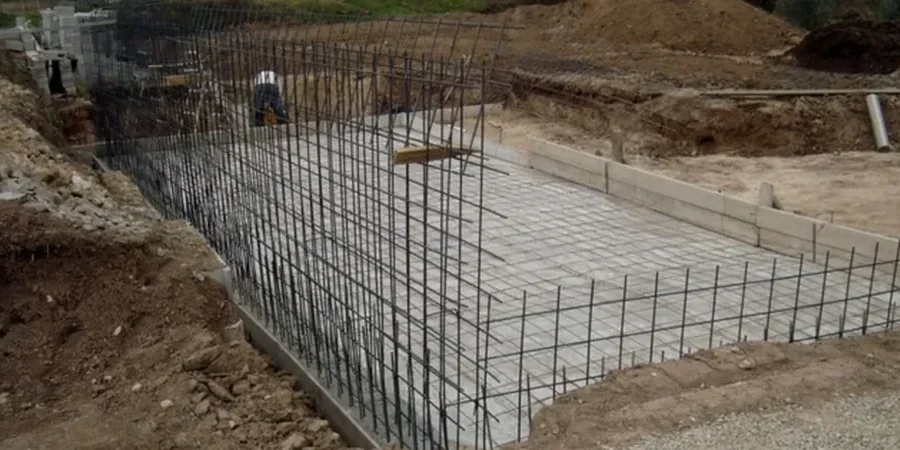
The mistake we see repeatedly in Gilbert subdivisions is the copy-paste foundation: a generic 12-inch-thick post-tensioned slab specified without adjusting tendon spacing or rib depth for the soil variability within the same lot. A plan that works on a graded fill pad near Val Vista Drive can underperform on a residual clay pocket two blocks east, where the pre-consolidation pressure is lower and the plasticity index jumps above 25. Shallow foundation design in this part of Maricopa County demands differential movement analysis tied to actual boring logs, not county-wide soil maps. We run ASTM D4546 one-dimensional swell-collapse sequences on remolded samples compacted to field moisture, then feed those strain values into a finite-element model of the footing-soil interface. The deliverable is a foundation plan that prescribes stiffening beam depth, concrete strength class, vapor barrier placement, and subgrade preparation — including whether moisture conditioning or a select-fill lift is required to meet the 1-in-360 angular distortion limit that the Post-Tensioning Institute recommends for residential slabs.
Shallow Foundation Design in Gilbert, AZ — Geotechnical Safety for Residential & Commercial Projects
Technical reference — Gilbert

Local geotechnical context

The Sonoran Desert climate creates a shrink-swell cycle that punishes shallow foundations more aggressively than many engineers anticipate. Gilbert gets only 9 inches of rain annually, but over half falls between July and September in convective bursts that saturate the upper soil profile within hours. The same clay that held a 2,000 psf bearing capacity in October can lose half that strength when saturated, while the desiccated crust that follows a dry May will crack open and allow surface water to pond directly beneath the slab perimeter. Add irrigated landscaping — a standard feature in every Gilbert HOA — and you introduce a year-round moisture source that keeps the active zone permanently unstable at the drip-line. Foundation design here is a moisture-control problem as much as a bearing-capacity problem. We specify perimeter swales graded at 5% minimum, downspout extensions to 10 feet, and root barriers where mesquite or palo verde trees sit within 15 feet of the foundation line.

Need a geotechnical assessment?

Reply within 24h.

Email: info@geotechnicalengineering.sbs

Applicable standards

IBC 2021 (Chapter 18: Soils and Foundations), ASCE 7-22 (Minimum Design Loads — Site Soil Classification), ASTM D4546 (One-Dimensional Swell/Collapse of Cohesive Soils), ASTM D1557 (Modified Proctor Compaction), PTI DC10.5 (Post-Tensioned Slabs-on-Ground)

Technical parameters

ParameterTypical value
Allowable bearing pressure1,500–2,500 psf (native clay); 3,000+ psf (engineered fill)
Swelling potential (PI > 25)Heave > 1 inch; requires stiffening beams or soil treatment
Slab rib depth (post-tensioned)18–30 inches, dependent on edge lift/swell magnitude
Moisture barrier10-mil poly over 4-inch capillary break (per ACI 360R)
Subgrade prep for collapsible siltPre-wetting + proof rolling to 95% modified Proctor (ASTM D1557)
Typical investigation depth15–20 ft below natural grade (2x footing influence zone)
Applicable codeIBC Chapter 18 + ASCE 7-22 soil profile classification

Questions and answers

What is the cost range for a shallow foundation design report for a single-family home in Gilbert?

For a standard residential lot in Gilbert, the geotechnical investigation and shallow foundation design report typically ranges from US$1,610 to US$2,710. The final figure depends on the number of borings required (usually 2 to 3 for a 6,000–8,000 sq ft pad), the depth of exploration, and whether collapsible-soil testing is required. A commercial tilt-up building will price higher due to increased boring count and lab testing volume.

Do Gilbert building officials require a geotechnical report for a custom home foundation permit?

Yes. The Town of Gilbert adopts IBC Chapter 18, which mandates a geotechnical investigation for any structure requiring a building permit, with limited exceptions for minor accessory structures. The report must classify the site soil profile per ASCE 7, provide allowable bearing pressure, and address expansive-soil mitigation. The town’s Development Services Department will not approve foundation plans without a signed and sealed report from an Arizona-registered geotechnical engineer.

How do you address the expansive clay problem that is so common in Gilbert subdivisions?

We run swell-consolidation tests (ASTM D4546) on undisturbed samples to quantify heave under saturated conditions, then design the foundation to accommodate that movement — usually by deepening the perimeter stiffening beam and adding interior ribs. Where the expansion index exceeds the PTI threshold, we specify moisture-conditioned select fill below the slab, a 10-mil vapor barrier, and drainage details that keep roof runoff and landscape irrigation at least 5 feet from the foundation edge. Post-construction, we recommend the owner follow a consistent landscape watering schedule to avoid moisture differentials.

Location and service area

We serve projects in Gilbert and surrounding areas.

View larger map