GEOTECHNICALENGINEERING
GILBERT
HomeInvestigationCPT (Cone Penetration Test)

CPT Testing Gilbert AZ: Cone Penetration Data You Can Build On

Geotechnical engineering with regional judgment.

LEARN MORE

Gilbert’s building codes reference IBC and ASCE 7, and the geotechnical report needs to back up every design assumption. The CPT test is often the fastest way to get that data here. Our team runs cone penetration tests on lots across the Heritage District and out toward the Santan Mountains, dealing with the same interbedded clays, silts, and sands you see in every trench log east of the Loop 202. Because we push the cone in situ, we skip the sample disturbance that mud rotary can cause in this basin fill. For sites where the stratigraphy is already known, we sometimes pair CPT with test pits to ground-truth refusal depths near gravel stringers, but CPT alone usually gives us the continuous profile the structural engineer needs for shallow foundation design.

Continuous CPT data gives the engineer a high-resolution look at stratigraphy without disturbing the soil fabric—critical in Gilbert’s interbedded basin fill.
Our service areas

Our approach and scope

In Gilbert, we often see refusal on gravel lenses before hitting the design depth the owner expected. This is a basin, and the coarse layers are unpredictable. That’s why we run a friction sleeve on every push and log sleeve friction ratio continuously. When the ratio spikes, we flag it. No waiting for lab results. The cone also captures pore pressure dissipation, which matters when you’re placing footings near the Roosevelt Water Conservation District canals or any of the irrigated lots south of Ray Road. We’ve worked sites where the groundwater table fluctuated three feet between seasons, and the CPT data caught the perched zone before it became a dewatering surprise during excavation. The ASTM D5778 standard drives our procedure and we calibrate the cone before each project with a certified load cell traceable to NIST.
CPT Testing Gilbert AZ: Cone Penetration Data You Can Build On
Technical reference — Gilbert

Local geotechnical context

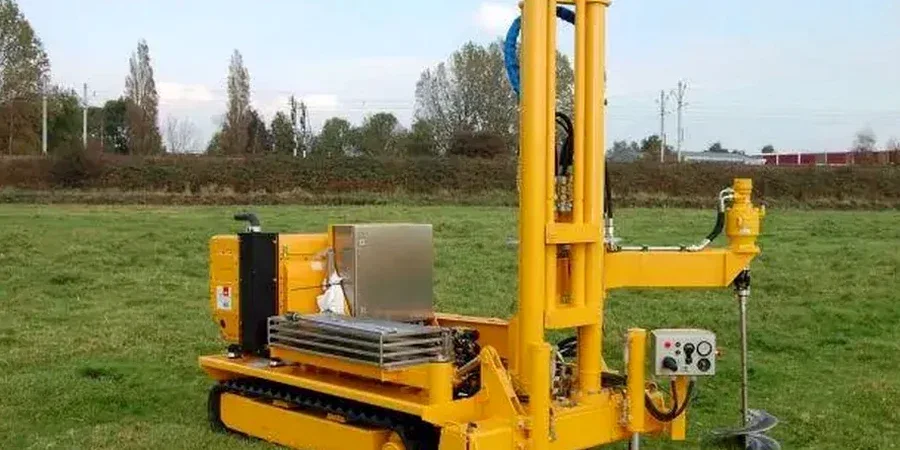
We run a 20-ton CPT rig on tracks, which lets us set up on raw dirt, asphalt millings, or a graded pad without a separate drill platform. The hydraulic rams push a 15 cm² cone at a constant rate while the onboard data logger records qc, fs, and u2 every two centimeters. The operator watches the real-time readout; if the friction ratio drops suddenly and qc spikes, we’re likely hitting a gravel lens and we call the engineer before continuing. In Gilbert’s older neighborhoods near downtown, where backyard access is tight and overhead clearance is limited by mature mesquite trees, we can switch to a smaller tracked carrier that still delivers the same push capacity. The main risk onsite is refusal on cobbles within the basin fill—once refusal occurs, we note the depth and switch the investigation plan to include SPT drilling if the client needs deeper data.

Need a geotechnical assessment?

Reply within 24h.

Email: info@geotechnicalengineering.sbs

Applicable standards

ASTM D5778 – Standard Test Method for Electronic Friction Cone and Piezocone Penetration Testing, IBC 2021 – Section 1803 Geotechnical Investigations, ASCE 7-22 – Minimum Design Loads and Associated Criteria, ASTM D2487 – Classification of Soils for Engineering Purposes (correlated from CPT)

Technical parameters

ParameterTypical value
Cone tip resistance (qc)0 – 100 MPa, logged every 2 cm
Sleeve friction (fs)Logged simultaneously with qc
Friction ratio (Rf)Calculated in real time
Pore pressure (u2)Measured at the shoulder (filter element)
Push rate20 mm/s ± 5 mm/s per ASTM D5778
Maximum push depthTypically 60–80 ft in basin sediments
Data output formatExcel, PDF log, and digital .cor file

Questions and answers

How much does a CPT test cost in Gilbert?

CPT testing in Gilbert typically ranges from US$160 to US$230 per push, with the total project cost depending on the number of soundings and total linear footage. Mobilization, traffic control if required, and data reporting are included in the quote we provide after reviewing your site address.

Can CPT replace SPT drilling on my Gilbert project?

In many cases, yes. CPT provides a continuous profile and is excellent for stratigraphic profiling in the interbedded sediments common in Gilbert. However, if you need a physical soil sample for lab testing—like Atterberg limits or triaxial—CPT alone won’t give you that. We often combine CPT with a few SPT borings to satisfy the sampling requirements of the geotechnical report.

How deep can you push the cone in Gilbert soils?

Depth depends on the soil resistance. In the basin fill clays and sands typical of Gilbert, we routinely reach 60 to 80 feet. If we encounter a thick gravel or cobble layer, refusal may occur shallower. Our rig has a 20-ton push capacity, which handles most conditions east of the Loop 202.

Do you handle the CPT data interpretation and reporting?

Yes. We process all the raw qc, fs, and u2 data and generate a log with interpreted soil behavior type based on the Robertson chart. The final report includes corrected cone resistance, friction ratio, and pore pressure plots, ready for your geotechnical engineer to use in foundation design.

Location and service area

We serve projects in Gilbert and surrounding areas.

View larger map