GEOTECHNICALENGINEERING
GILBERT
HomeLaboratoryAtterberg limits

Atterberg Limits Testing in Gilbert – Plasticity & Soil Classification

Geotechnical engineering with regional judgment.

LEARN MORE

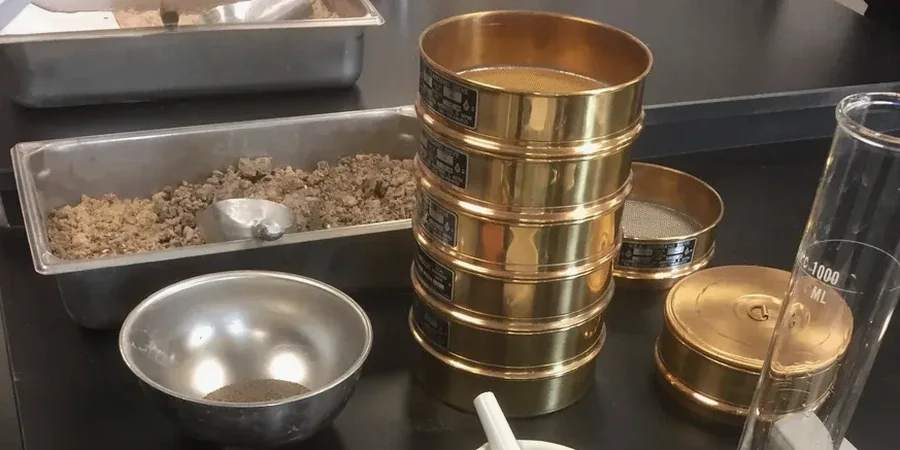
Gilbert’s transformation from a railroad siding for alfalfa and grain to one of the fastest-growing communities in Maricopa County has placed immense demand on its subsurface. The surficial geology here—dominated by late Quaternary alluvial deposits of the Gila River system and flanking younger piedmont alluvium—means site conditions can shift from clean sands to highly plastic clay lenses within a few hundred feet. When a contractor encounters that sticky reddish-brown clay at depth, knowing its exact liquid and plastic limits becomes everything. Our laboratory team runs Atterberg limits testing under ASTM D4318 for every fine-grained sample that arrives from the field, because the plasticity index doesn’t just fill a row on a boring log—it tells the structural engineer how much volume change to expect during the monsoon season and whether the material will pump under repeated loading. Complementing these index properties, we often recommend grain-size analysis when the fines fraction needs precise quantification, especially for mixed alluvial soils where the percentage passing the No. 200 sieve dictates which classification path to follow.

In Gilbert’s basin-fill clays, a plasticity index above 25 changes the foundation conversation—it’s no longer just bearing capacity, it’s moisture control and long-term movement prediction.
Our service areas

Our approach and scope

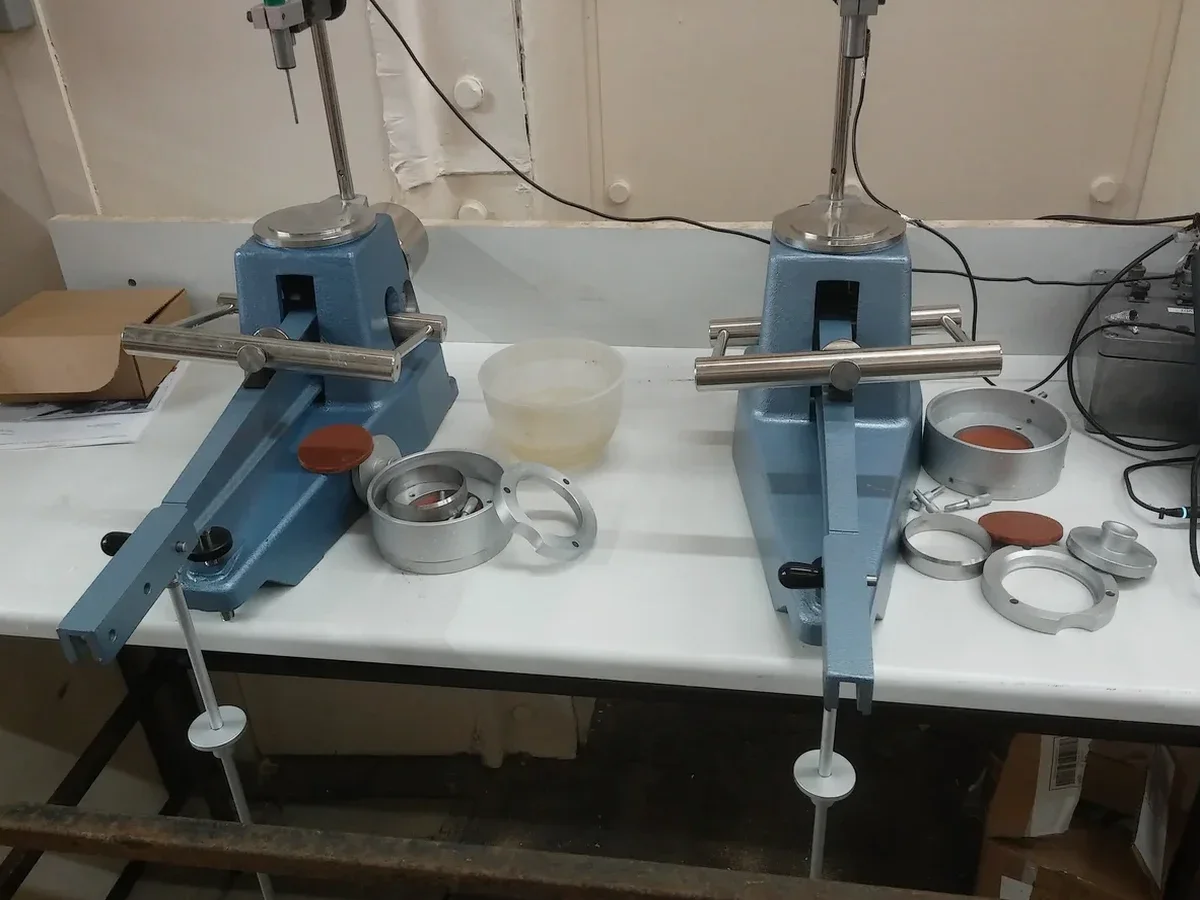
We recently worked on a three-story medical office building near the SanTan Village corridor, where the upper five feet were sandy lean clay that crumbled easily in hand, but at six feet the material turned into a fat clay with a wax-like sheen. The owner’s geotechnical engineer had specified a maximum allowable plasticity index of 20 for the structural fill zone, and the fat clay was testing at 34. That single number redirected the earthwork contractor to overexcavate deeper than planned and import select fill. Our lab performed the liquid limit using a calibrated Casagrande percussion device—brass cup, hard rubber base, flat grooving tool—and ran the plastic limit by hand-rolling threads to 3.2 mm diameter until crumbling occurred, exactly as ASTM D4318 prescribes. The plasticity index we reported triggered a full review of the footing design; the structural team switched from a shallow spread footing to a deeper drilled pier system to keep differential settlement within tolerance. In our experience across Gilbert’s basin-fill deposits, controlling these index values early prevents disputes about heave and shrinkage later.
Atterberg Limits Testing in Gilbert – Plasticity & Soil Classification
Technical reference — Gilbert

Local geotechnical context

The basin-fill deposits underlying Gilbert belong to the Middle Gila and Salt River alluvial systems, and in many central Gilbert parcels the clay layers are derived from weathered volcaniclastics transported from the Superstition Mountains. These clays often contain montmorillonite, which gives them high activity—meaning small changes in moisture produce disproportionate volume change. Combine that with the summer monsoon cycle of intense rainfall followed by rapid drying under 105°F air, and you have a natural laboratory for shrink-swell distress. We have seen slab-on-grade foundations in the Heritage District develop hairline cracks within two years when the supporting clay had a plasticity index above 30 and no moisture barrier was installed. The risk isn’t limited to residential slabs; utility trenches backfilled with high-plasticity native soil compacted wet can settle differentially as they dry back, creating dips in asphalt pavement and stressing buried pipelines. Running Atterberg limits on every five-foot interval in the boring profile—not just the bearing stratum—gives the design team a complete picture of where the active zone begins and ends.

Need a geotechnical assessment?

Reply within 24h.

Email: info@geotechnicalengineering.sbs

Applicable standards

ASTM D4318-17e1 – Standard Test Methods for Liquid Limit, Plastic Limit, and Plasticity Index of Soils, ASTM D2487-17 – Standard Practice for Classification of Soils for Engineering Purposes (Unified Soil Classification System), ASTM D2216 – Standard Test Methods for Laboratory Determination of Water (Moisture) Content of Soil and Rock by Mass

Technical parameters

ParameterTypical value
Liquid Limit (LL)Determined via Casagrande percussion cup; reported as moisture content at 25 blows per ASTM D4318
Plastic Limit (PL)Determined by hand-rolling soil threads to 3.2 mm (1/8 in.) until crumbling; moisture content at transition
Plasticity Index (PI)Calculated as LL – PL; indicates range of moisture content where soil behaves plastically
Liquidity Index (LI)Calculated from natural moisture content relative to LL and PL; used to assess in-situ consistency
Activity (A)Ratio of PI to clay fraction (% < 2 µm); helps identify clay mineralogy (smectite, illite, kaolinite)
Sample Preparation MethodWet preparation with distilled water; material passing No. 40 sieve for LL; air-dried for PL thread rolling
Reporting StandardASTM D4318-17e1; results integrated into USCS classification per ASTM D2487

Questions and answers

What does Atterberg limits testing cost for a typical residential lot in Gilbert?

For a single-family lot, we typically run a combined liquid and plastic limit determination on one or two representative samples from the boring. That falls between US$50 and US$100 per sample when bundled with a standard geotechnical investigation. Additional samples from deeper strata or separate trenches are priced per specimen. The total number of tests depends on how many distinct fine-grained layers the field log identifies.

Why do Gilbert soils require Atterberg limits when the Unified Soil Classification already gives a group symbol?

The group symbol (CL, CH, MH) tells you the classification bin but not the severity. Two clays can both classify as CL yet have plasticity indices of 12 and 23—the first is a lean clay with moderate shrink-swell potential, the second borders on fat clay behavior. The numerical PI drives decisions about moisture conditioning, stabilization with lime or cement, and allowable bearing pressure adjustments, so skipping the lab test means guessing on the most expensive variable in earthwork.

How do you keep the sample from drying out before testing when it comes from a Gilbert summer drilling site?

Samples from the field in Gilbert between June and September arrive in sealed brass-lined Shelby tubes or heavy-gauge plastic liners, placed inside an insulated cooler immediately at the rig. Our lab logs the received condition and rejects any sample where the liner is punctured or the soil surface shows visible desiccation cracks. We run the natural moisture content the same day the sample arrives and begin liquid limit preparation within 24 hours to minimize moisture loss.

Location and service area

We serve projects in Gilbert and surrounding areas.

View larger map