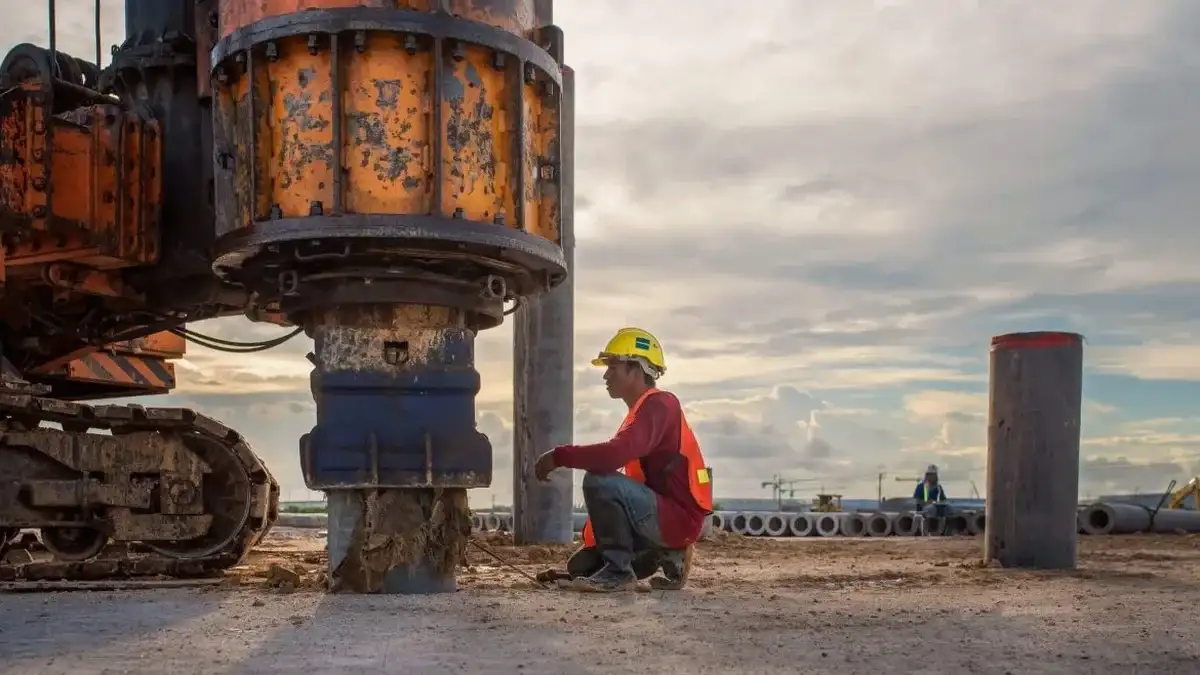
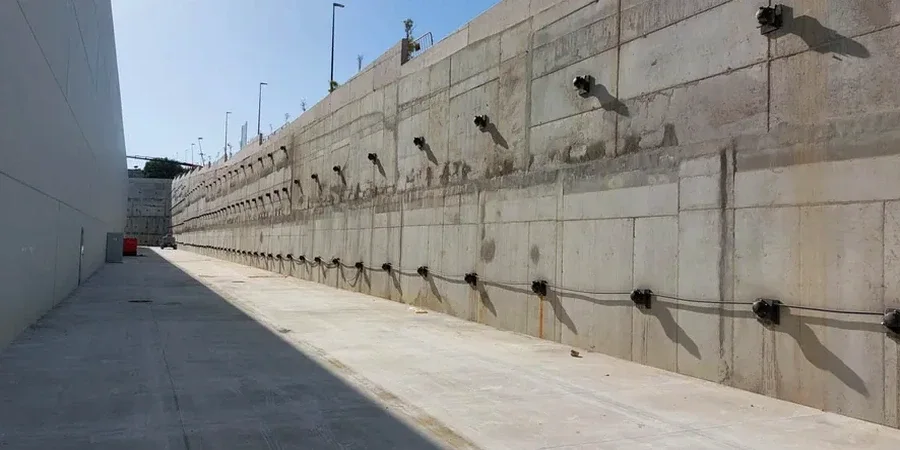
The hollow-stem auger hits the caliche layer and you hear it before you see it—a grinding chatter that tells the driller they’re into the cemented conglomerate that defines much of Gilbert’s subsurface. Designing anchors in this town means accounting for the abrupt transition from loose San Tan Valley silts to rock-hard petrocalcic horizons, often within the same borehole log. Our team has installed load-test instrumentation across projects from the Heritage District redevelopment to subdivisions pushing south toward the Santan Mountains. We know that a passive anchor grouted into that caliche behaves fundamentally differently than one socketed into the overlying granular alluvium, and we size the bond length and tendon accordingly. Before finalizing any anchor layout, we typically correlate data from exploratory spt-drilling to map the depth and continuity of the cemented zone across the site.
A properly designed anchor in Gilbert’s caliche can hold 120 kips in 25 feet of bond—but only if the cementation is continuous and the grout mix is tuned to the formation’s absorption rate.