GEOTECHNICALENGINEERING
GILBERT
HomeLaboratoryGrain size analysis (sieve + hydrometer)

Grain Size Analysis for Construction in Gilbert, AZ

Geotechnical engineering with regional judgment.

LEARN MORE

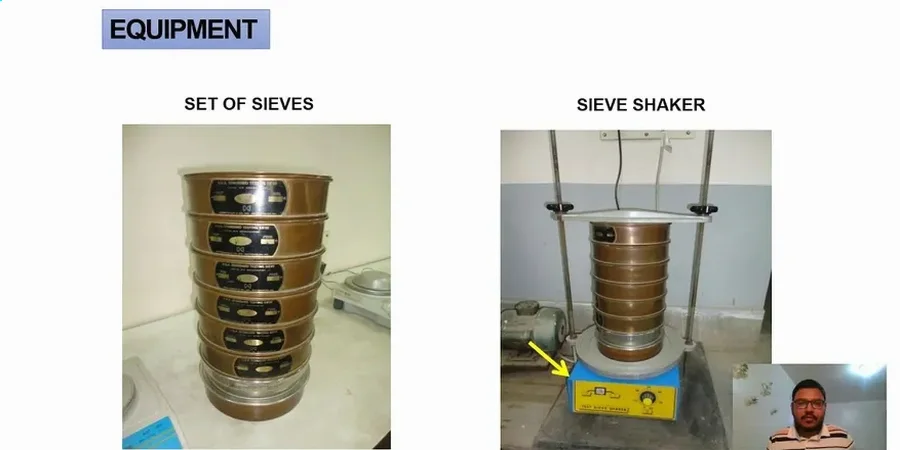
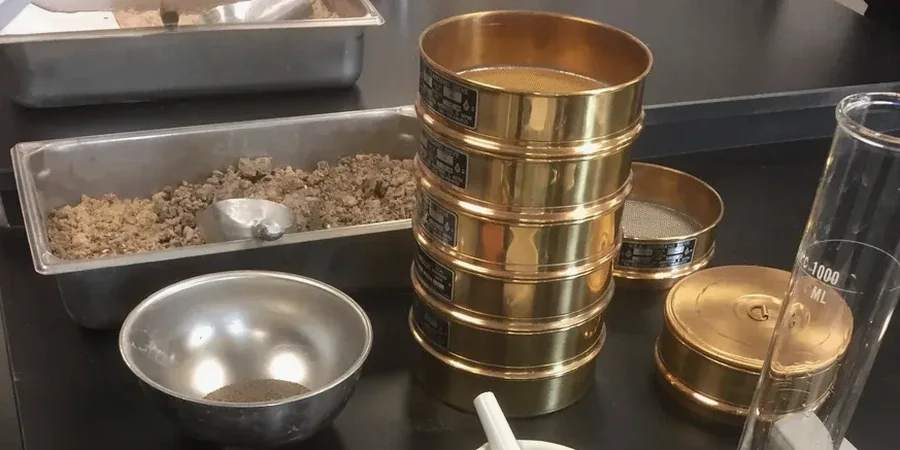
Beneath the pavement and the planned subdivisions of Gilbert, the soil transitions rapidly from coarse alluvial fan deposits near the San Tan Mountains to silty, fine-grained sediments in the old agricultural lands toward the Gila River. This shift from sandy gravel to fat clay can happen within a single parcel. The Town of Gilbert’s engineering standards, along with the IBC, mandate a precise grain size analysis before you can finalize a foundation depth or design a stormwater infiltration basin. A simple visual classification won't cut it when the geotechnical report lands on the plan reviewer’s desk. Our lab runs the full stack: mechanical sieving for the coarse fraction and ASTM D422-compliant hydrometer analysis for the fines, which is exactly what you need to nail the USCS classification and avoid costly over-excavation.

In Gilbert’s mixed alluvium, the hydrometer is just as critical as the sieve stack—fines content dictates both drainage behavior and seismic settlement potential.
Our service areas

Our approach and scope

A common mistake we see in the East Valley is contractors assuming that because the surface looks like clean sand, the material beneath will drain. In Gilbert, many of the silty sands are gap-graded and contain enough fines to trap water, which leads to subgrade softening under the monsoon rains. Without a proper hydrometer analysis, you can’t see that 15% passing the #200 sieve that flips the material from SM to a less permeable SC. The test also feeds directly into the soil’s liquefaction potential assessment, especially for sites near the Queen Creek paleochannel. If the gradation curve shows a steep slope with uniform particle size, the material has almost no internal stability, which often calls for ground improvement like stone columns before placing structural fill.
Grain Size Analysis for Construction in Gilbert, AZ
Technical reference — Gilbert

Local geotechnical context

Gilbert sits at roughly 1,240 feet above sea level, on the gentle slope between the Santan Mountains and the Gila River floodplain—an area that has seen rapid infill development since the 1990s. The biggest risk with skipping a detailed grain size test isn't just foundation settlement; it's the mischaracterization of expansive potential and collapsible soils. Many of the fine-grained deposits in the lower-lying areas contain significant clay fractions that swell when wetted, generating uplift pressures that crack slabs-on-grade. If the grain size analysis with hydrometer shows more than 30% clay-sized particles and the Atterberg limits confirm high plasticity, the structural engineer must either remove and re-compact the material or design a suspended floor system. Getting the gradation curve right on the first pass prevents structural distress and keeps the project within the IBC’s Chapter 18 design parameters.

Need a geotechnical assessment?

Reply within 24h.

Email: info@geotechnicalengineering.sbs

Applicable standards

ASTM D422 – Standard Test Method for Particle-Size Analysis of Soils, ASTM D2487 – Standard Practice for Classification of Soils for Engineering Purposes (USCS), IBC Chapter 18 – Soils and Foundations, AASHTO T 88 – Particle Size Analysis of Soils

Technical parameters

ParameterTypical value
Standard Test MethodASTM D422 / AASHTO T 88
Sieve Range3 in to No. 200 (75 mm – 75 µm)
Hydrometer Range0.075 mm to 0.001 mm (clay fraction)
Sample Mass (coarse)500 g to 20 kg depending on max particle size
Dispersing AgentSodium hexametaphosphate solution
USCS Classification OutputTwo-letter group symbol per ASTM D2487
Reporting FormatSemi-log gradation curve + digital CSV data

Questions and answers

How much does a sieve and hydrometer grain size analysis cost in Gilbert?

For a standard combined analysis on a single sample in the Gilbert area, the fee typically falls between US$90 and US$210. The exact amount depends on whether you need just the mechanical wash-sieve portion or the full hydrometer sedimentation test for the fines curve.

How long does the lab take to run a full grain size test?

A standard turnaround is 3 to 4 business days. The hydrometer analysis alone requires a 24-hour sedimentation period, and the sample must be fully oven-dried and properly dispersed before the test begins. Rush processing is available if the project schedule demands it.

Why do I need a hydrometer if my soil looks like clean sand?

In Gilbert, many sands contain a small but significant percentage of silt and clay that isn't visible to the naked eye. Particles smaller than 0.075 mm control the material’s permeability and frost susceptibility. The hydrometer quantifies that fine fraction so the engineer can accurately determine the USCS group symbol and decide if the soil is suitable for structural fill or drainage.

Does the Town of Gilbert require a specific grain size report format?

Yes. The Town’s engineering design standards require a semi-logarithmic grain size distribution curve showing percent passing each sieve size, along with the D10, D30, and D60 values used to calculate the coefficients of uniformity and curvature. Our reports are formatted to meet these submittal requirements directly.

Location and service area

We serve projects in Gilbert and surrounding areas. More info.

View larger map